MONSTERCAREERS
AI Job Seeker Prototype
An AI-driven job search experience that turns user input into a personalized path to the right role.
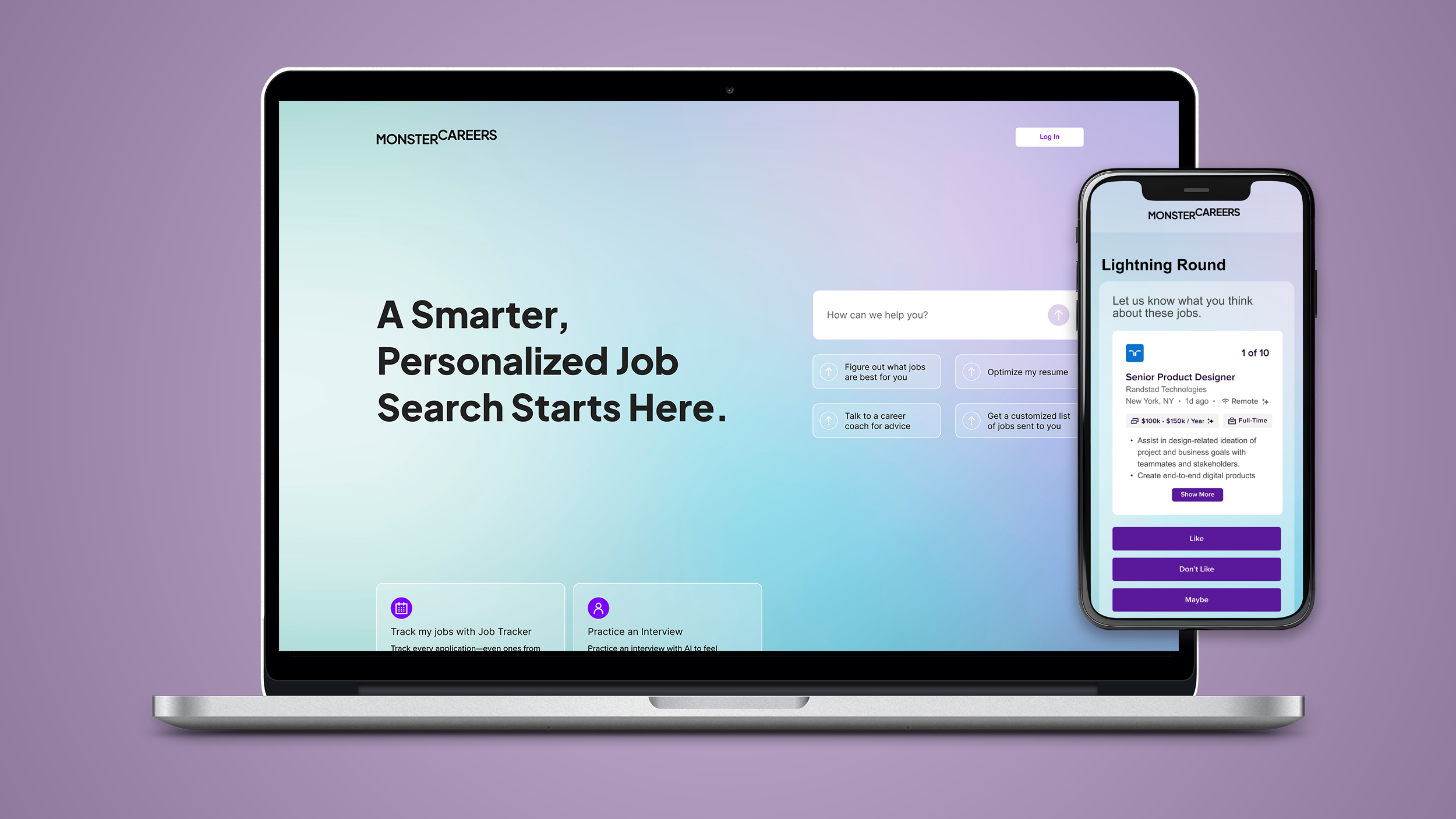
PROJECT OVERVIEW
A hi-fidelity prototype exploring how AI could improve the job seeker experience for a newly merged Monster + CareerBuilder platform.
With the merger, there was an opportunity to rethink the job search experience from the ground up—not just improve it incrementally.
The goal was to explore how AI could:
Help users quickly establish or refine their professional direction
Generate a strong, usable resume
Deliver relevant job recommendations with minimal effort
Rather than relying on assumptions, we used rapid prototyping and user testing to define what this experience should be.
ROLE
UX/UI Designer
Designed end-to-end experience and flows
Created all wireframes and prototypes (Figma)
Moderated user testing sessions
Collaborated with Product and Engineering on AI behavior and interaction patterns
PROJECT LENGTH
1 Month
TOOLS
Figma
UserTesting.com
METHODS USED
User Interviews
Iteration
Rapid Prototyping
User Testing
Hi-Fi Prototyping
IMPACT
Validated a new AI-driven product direction for job seekers
Influenced roadmap as a net-new product concept, not a replacement
Demonstrated the team’s ability to move from ambiguity to clarity in weeks
Secured leadership buy-in prior to company acquisition
The project was ultimately shelved post-acquisition, as the acquiring company had a similar product in market.
EXPLORATION & DISCOVERY
We approached this project with a simple assumption:
AI could help users figure out what they want to do.
We were wrong.
Through moderated sessions (10 users per round via UserTesting.com), we learned:
Users don’t come to job platforms to explore—they come with intent
Open-ended, aspirational questions slowed users down
Speed and clarity mattered more than flexibility
This fundamentally shifted the product from “career discovery” to “career refinement.”
Another key insight:
Users didn’t want a single AI interaction model. They preferred a hybrid approach depending on context:
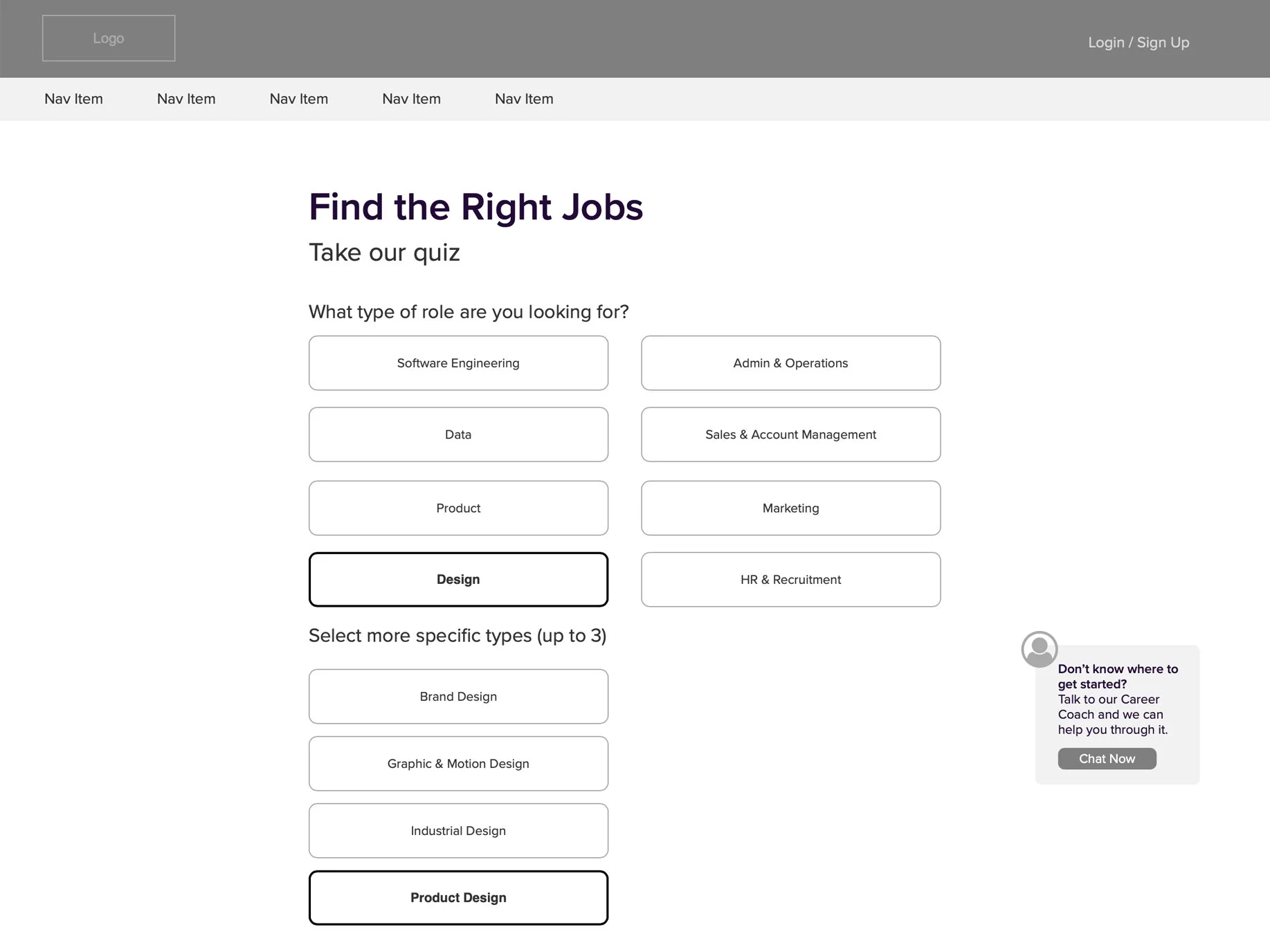
Structured inputs when unsure
Conversational flows when providing detailed information
UX/UI DESIGN PROCESS
Approach
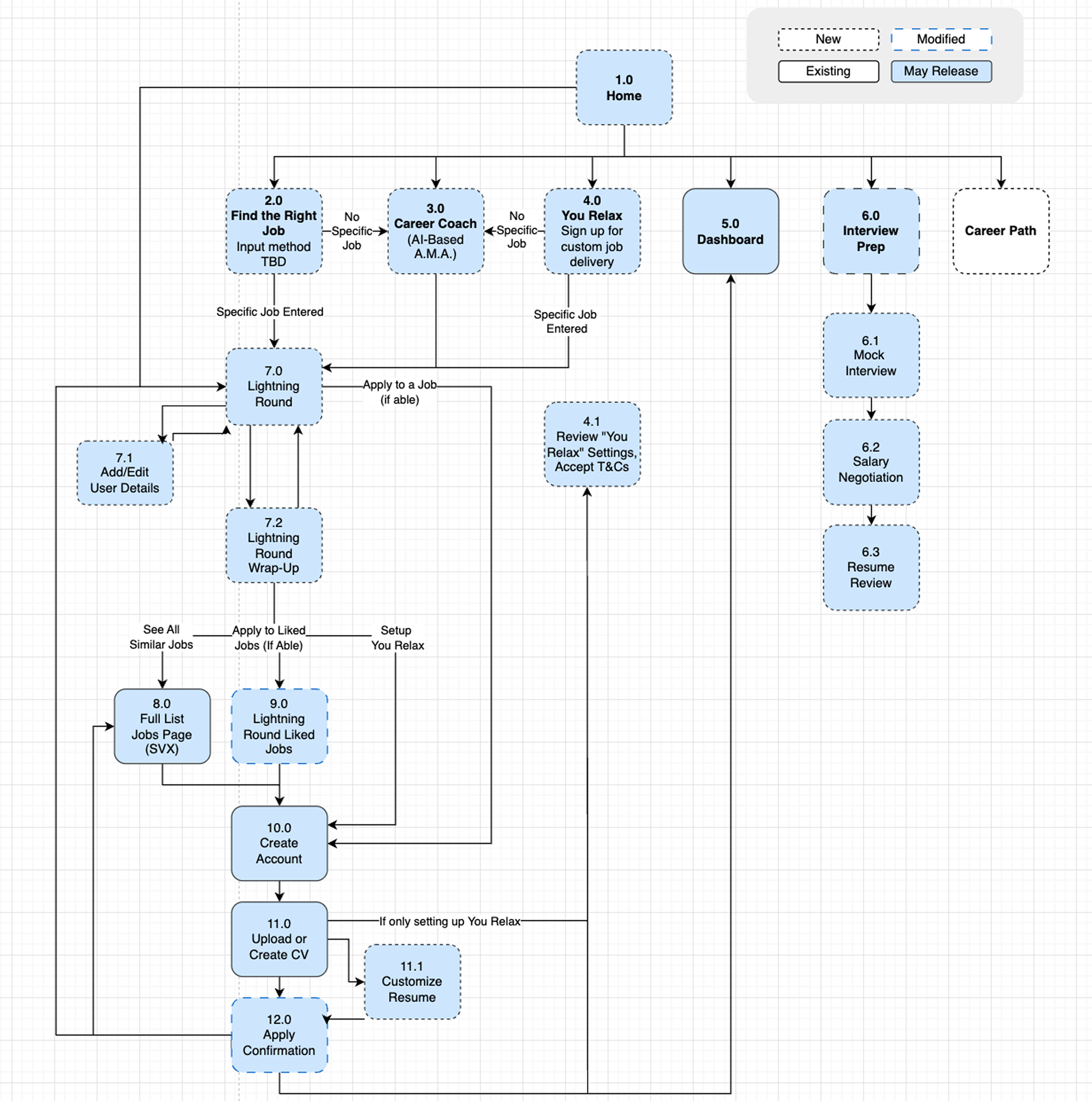
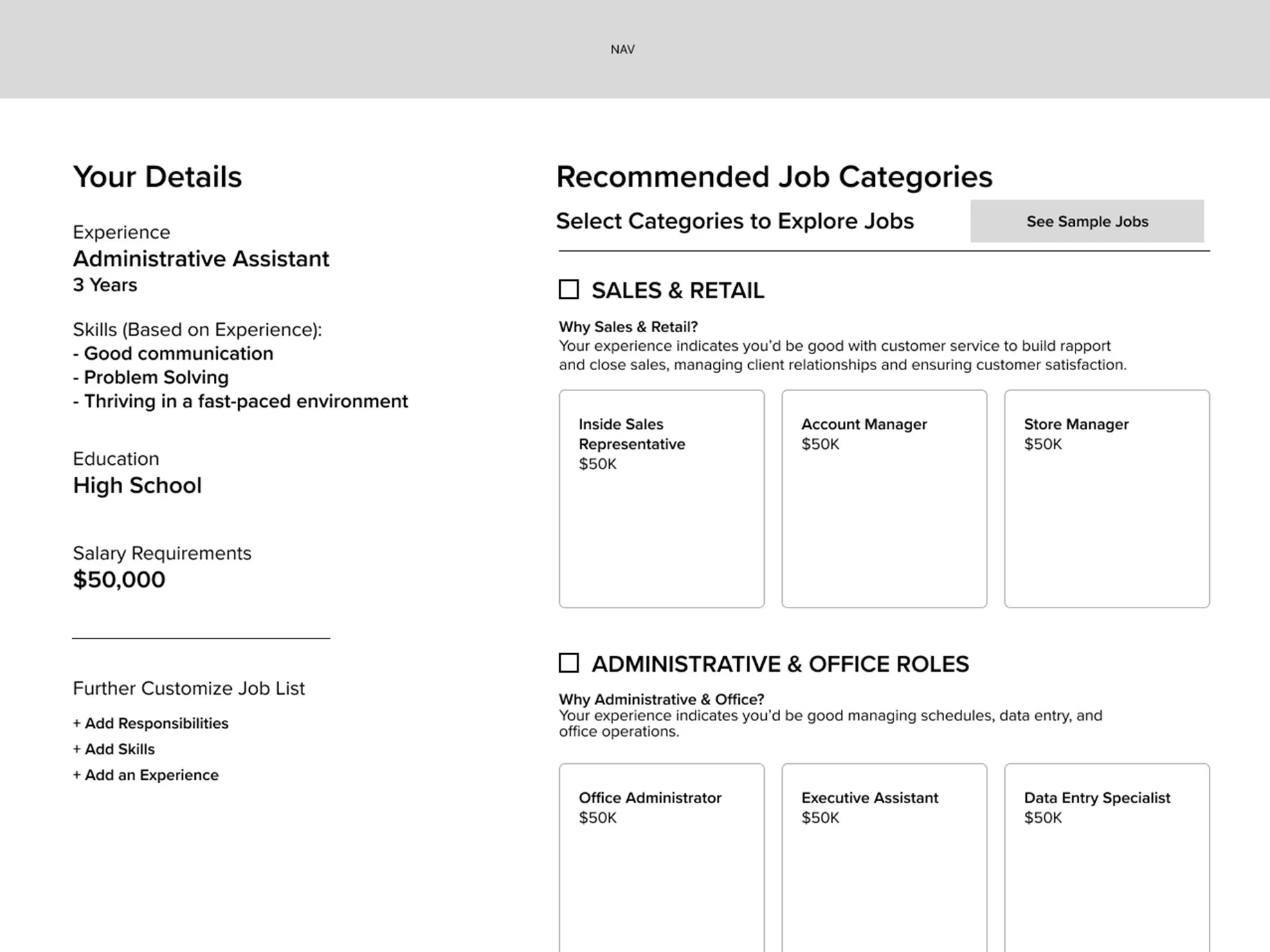
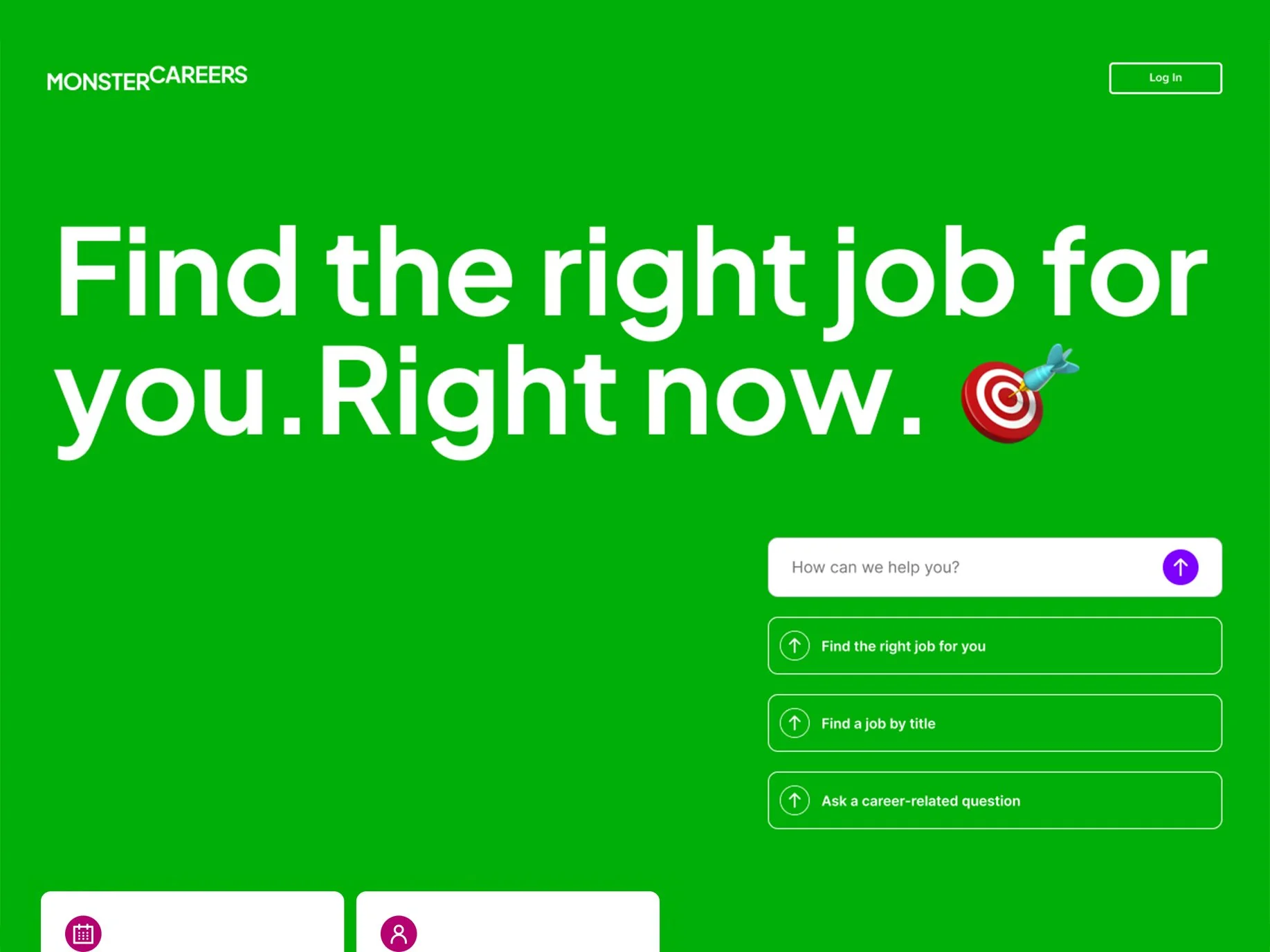
We designed the experience as a guided flow:
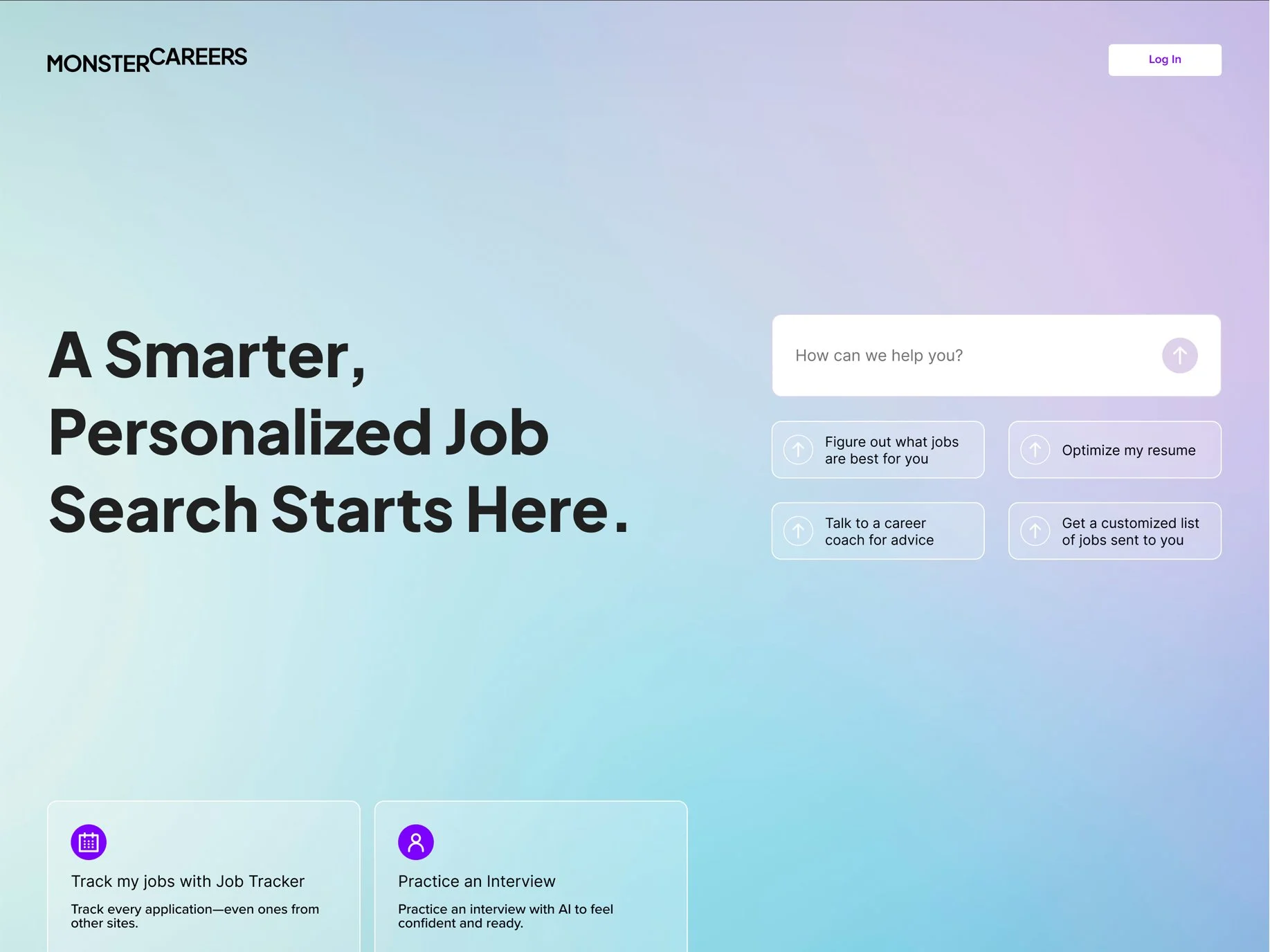
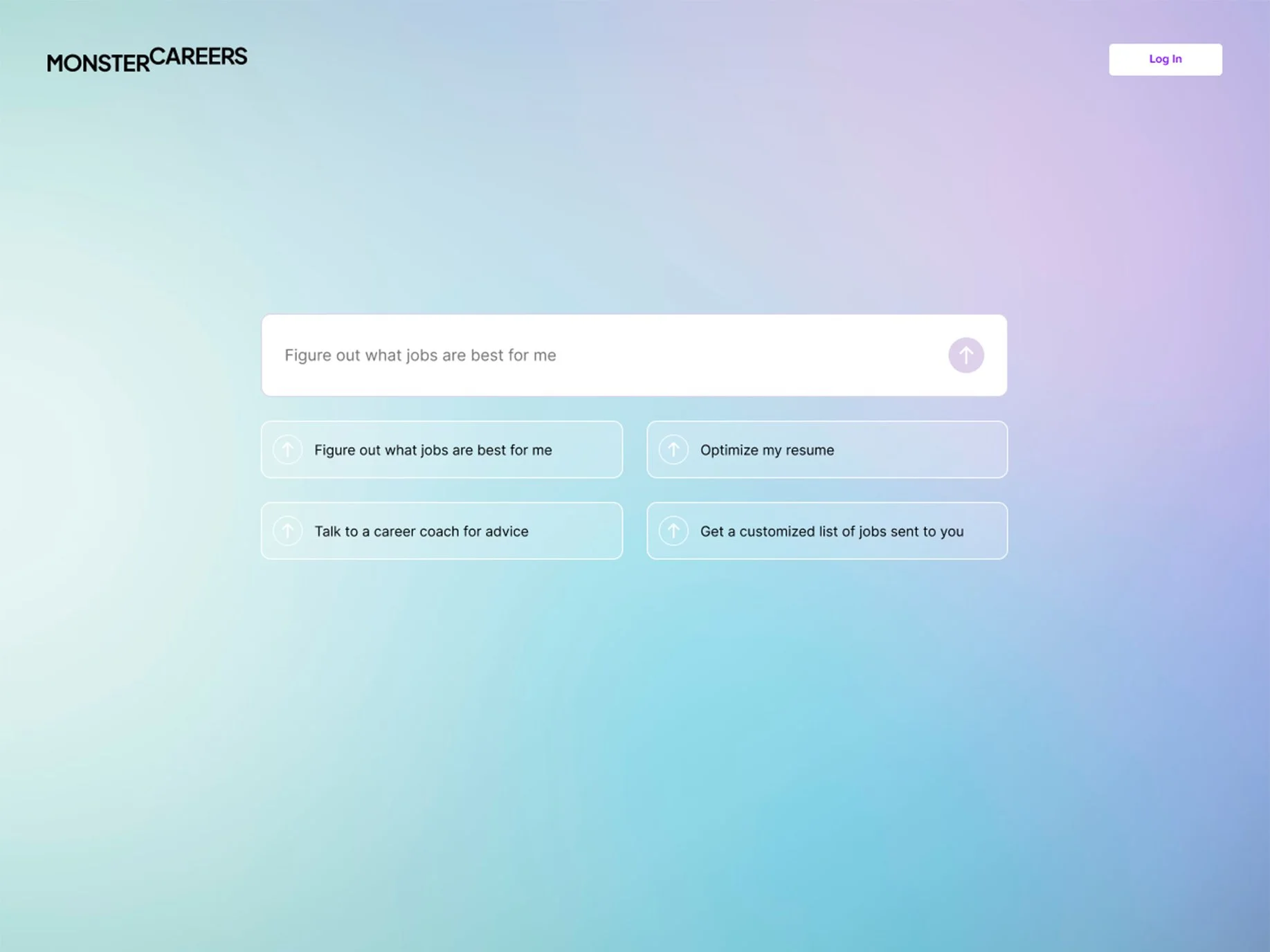
Onboarding
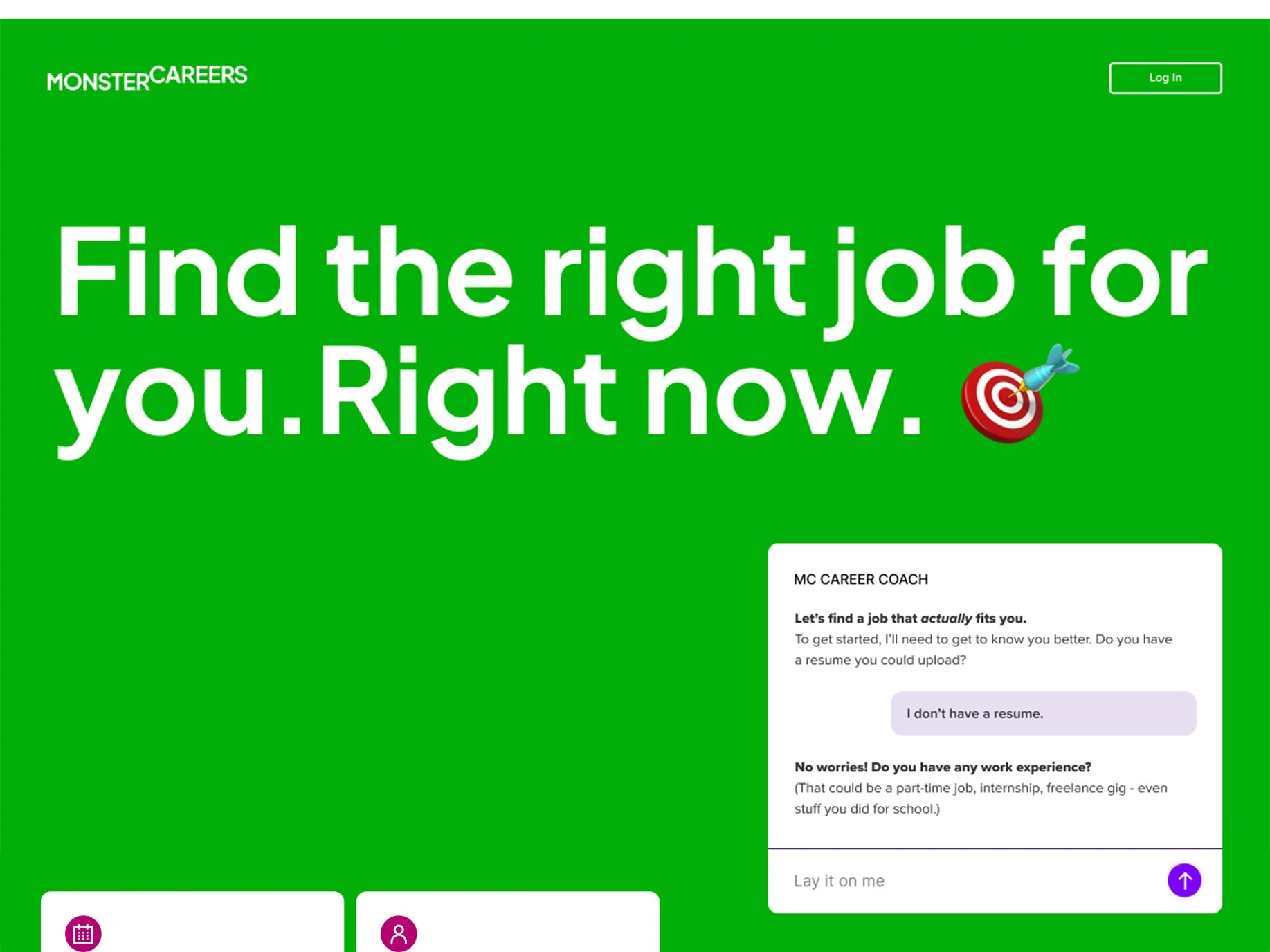
AI asks structured questions to understand the user’s goals and backgroundProfile + Resume Creation
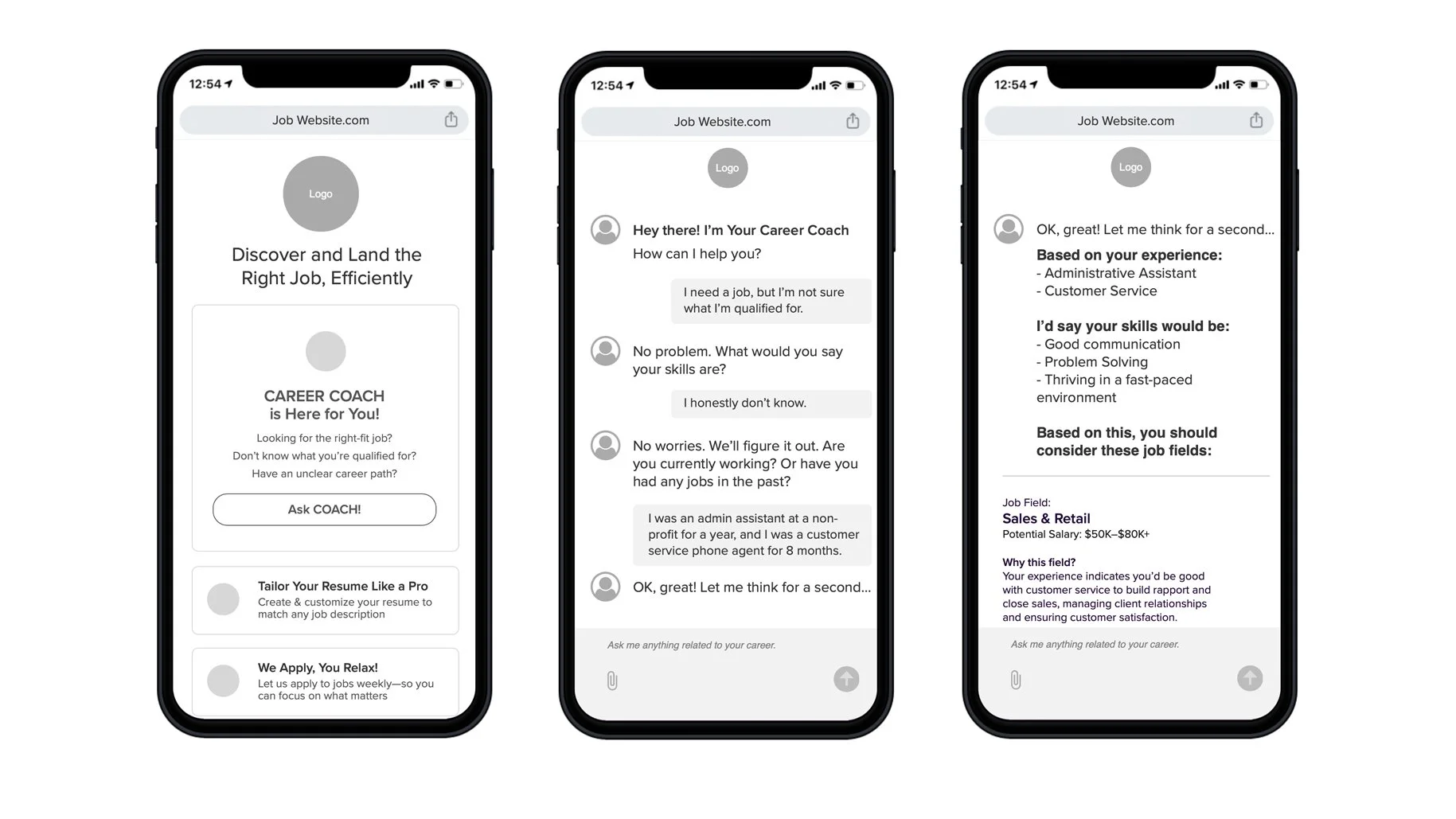
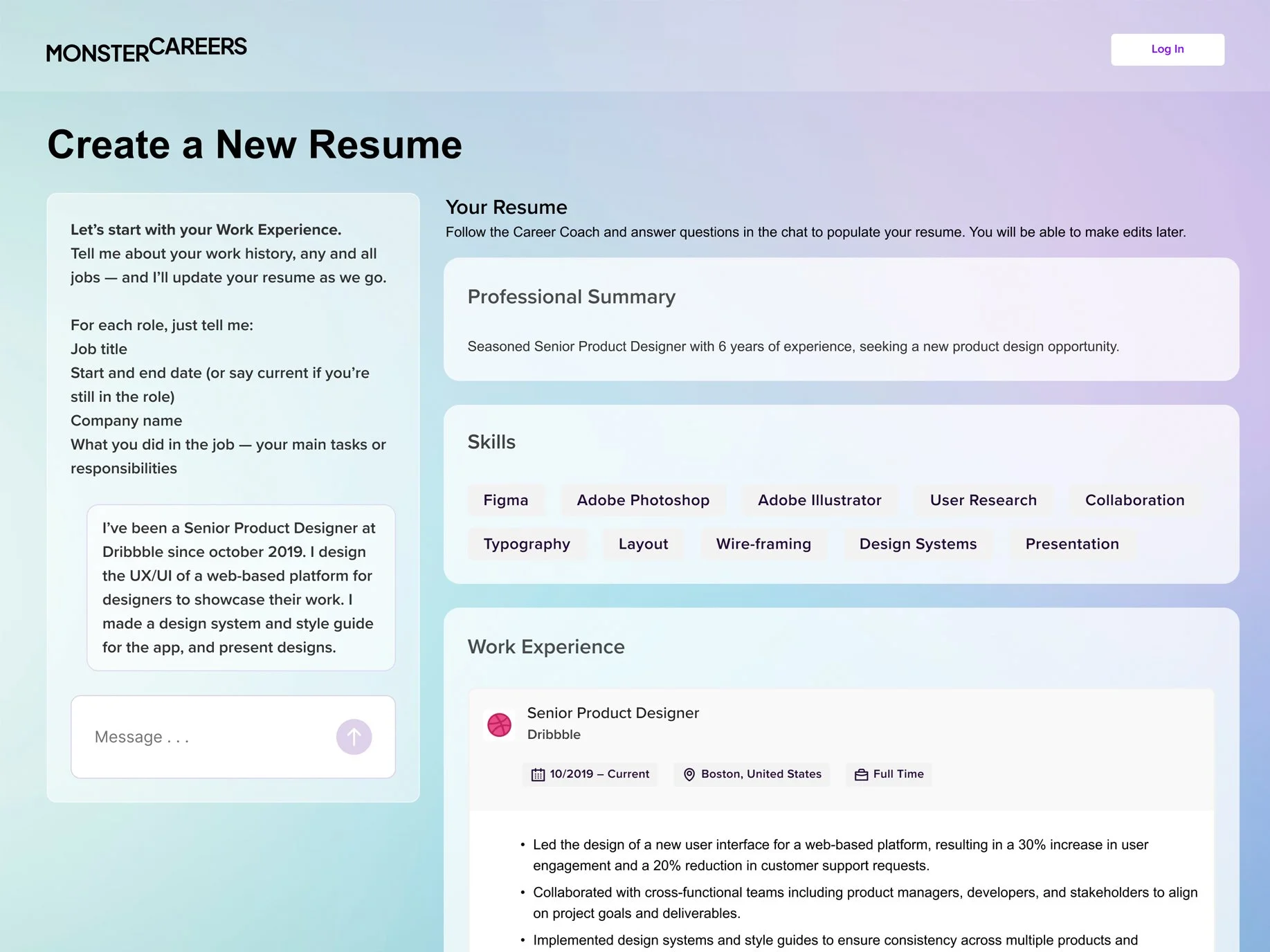
A conversational interface gathers experience, education, and skills
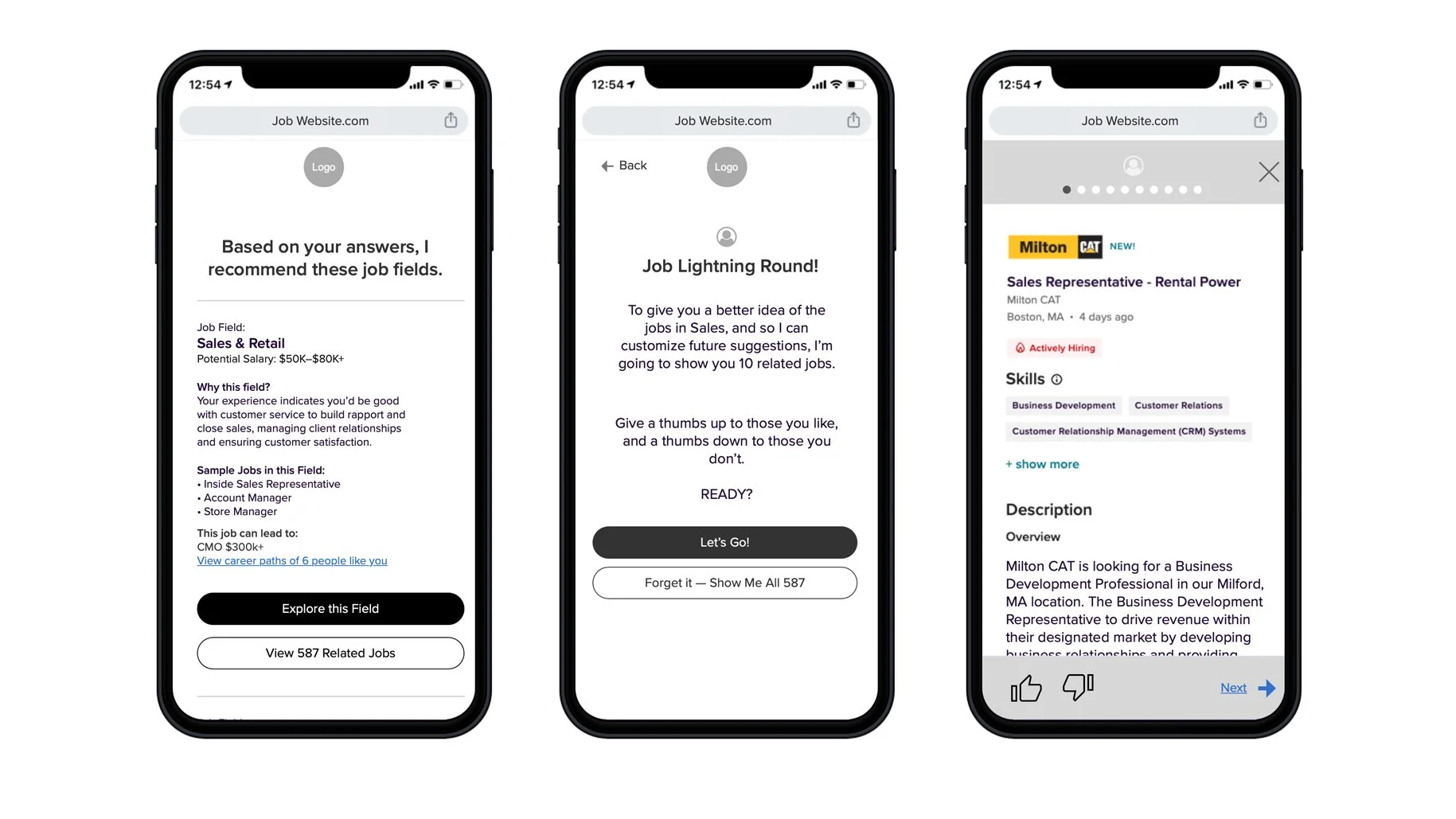
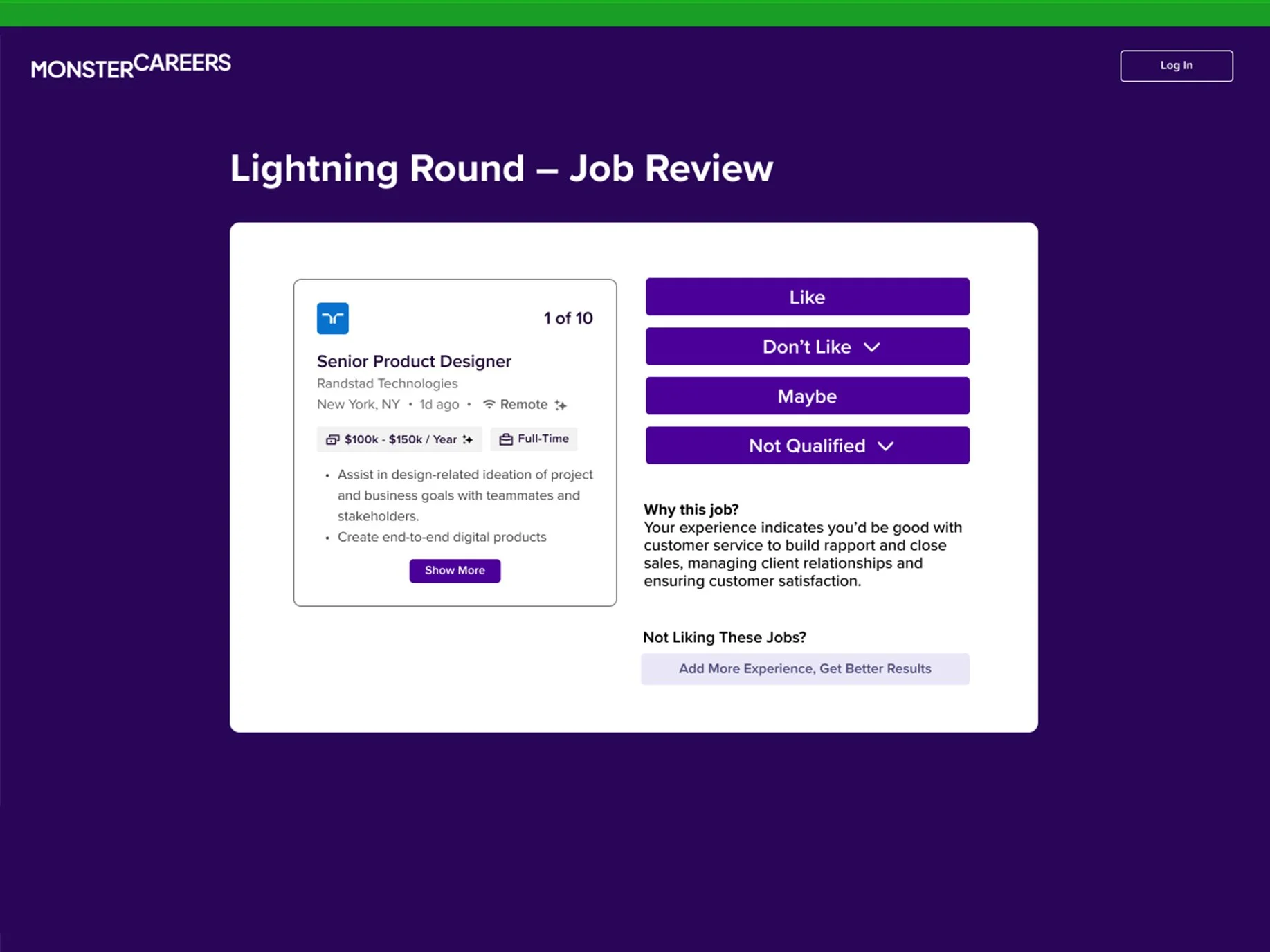
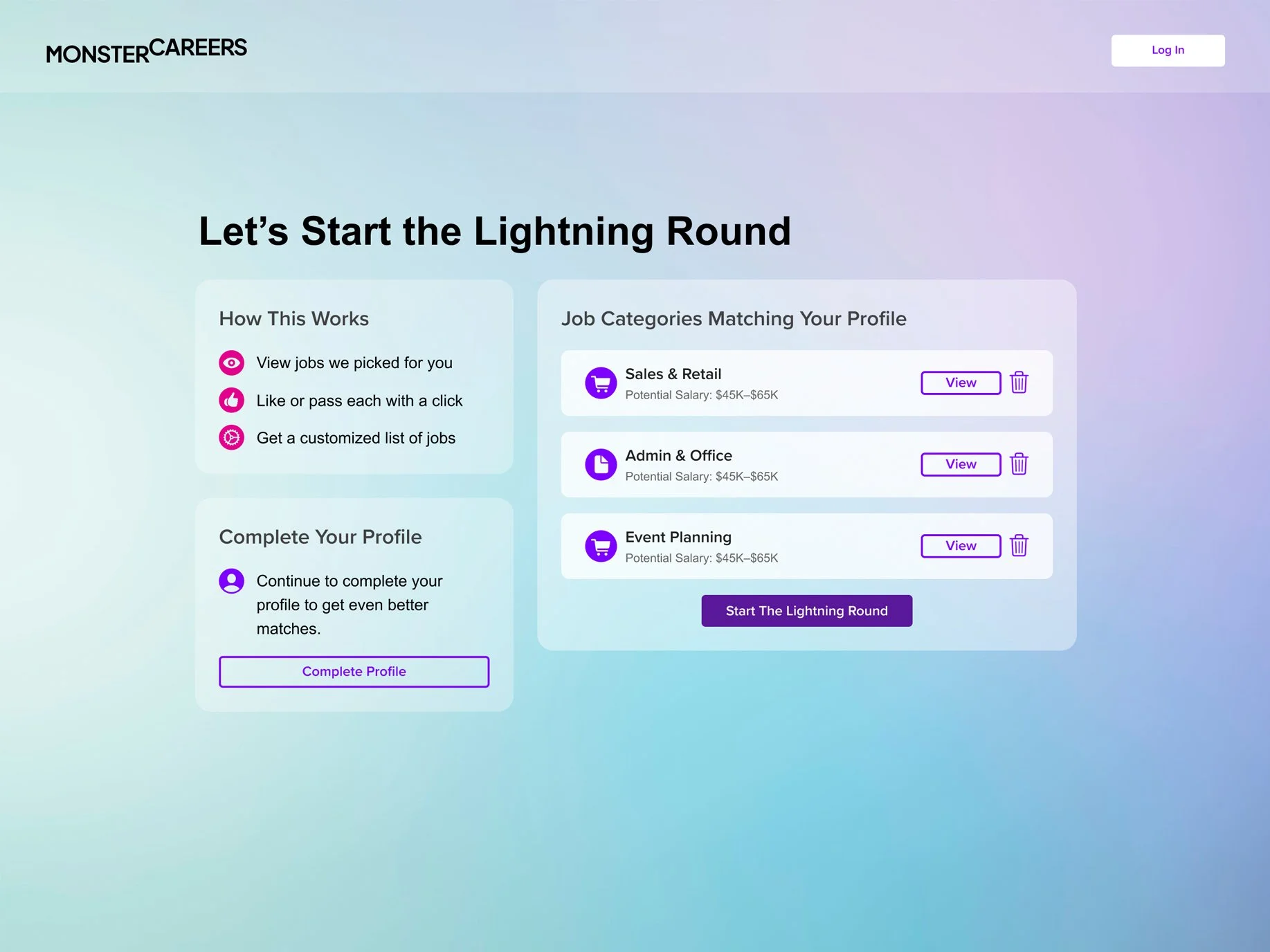
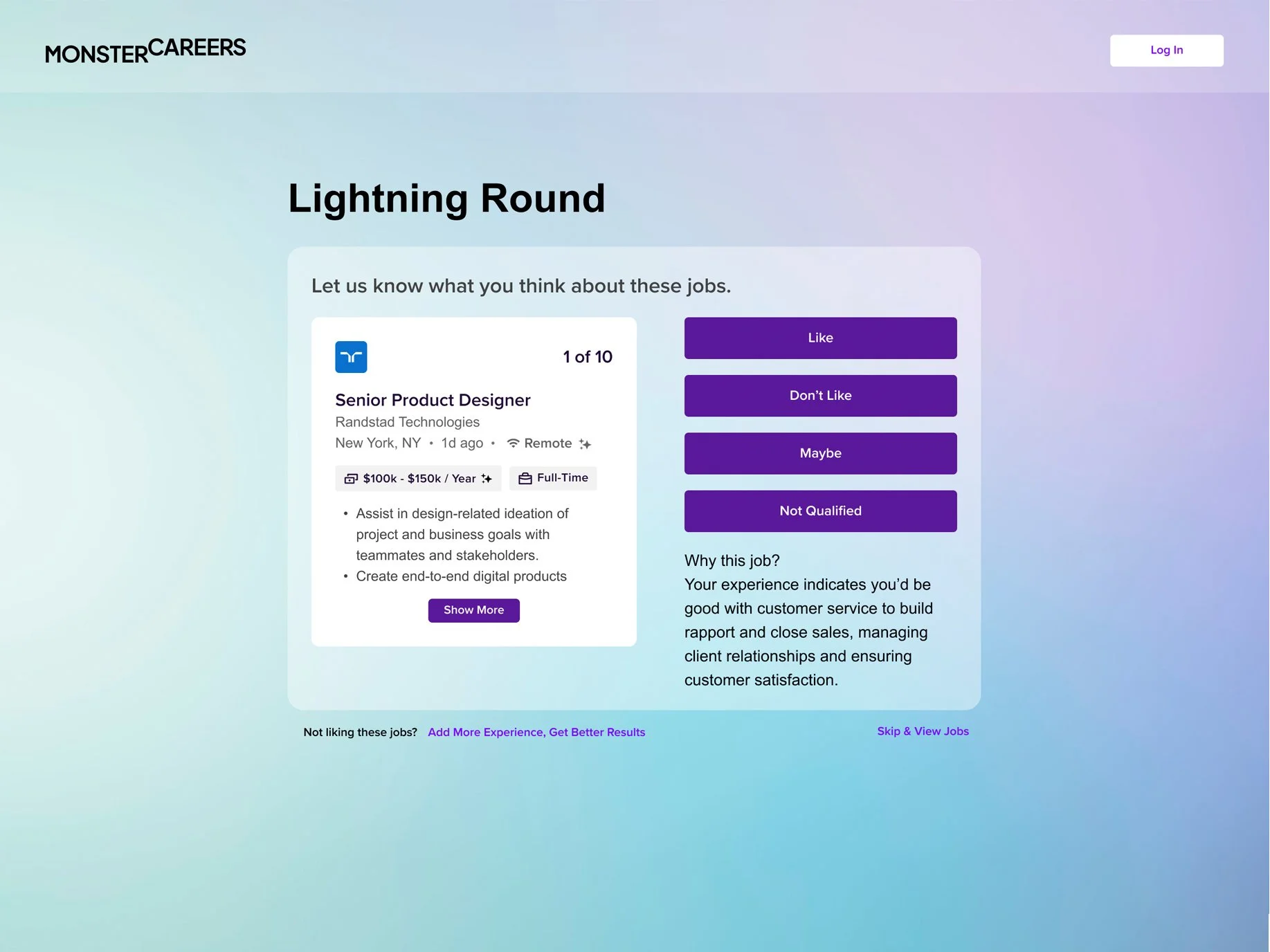
AI generates or improves a resume based on best practices“Lightning Round” Job Rating
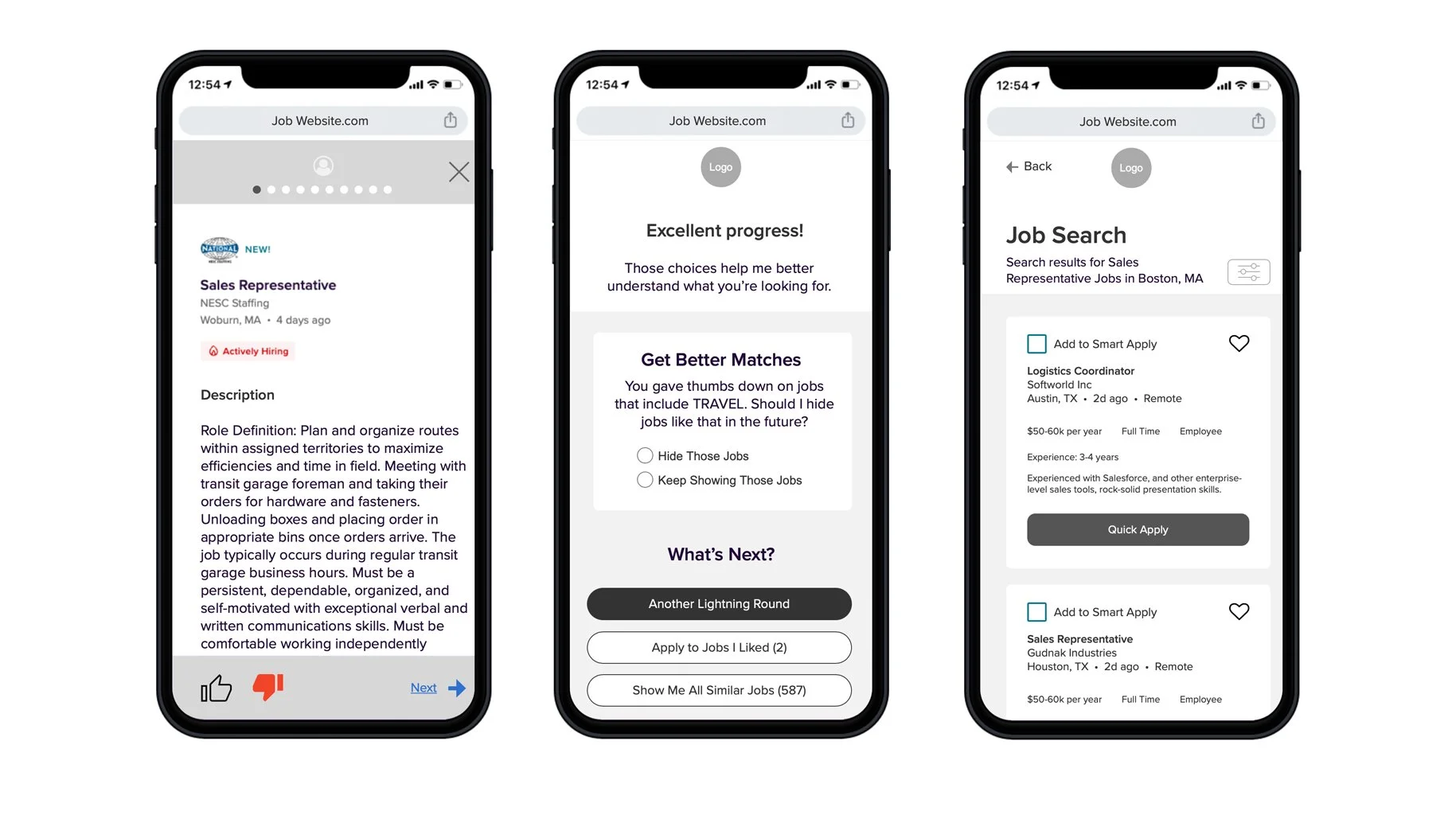
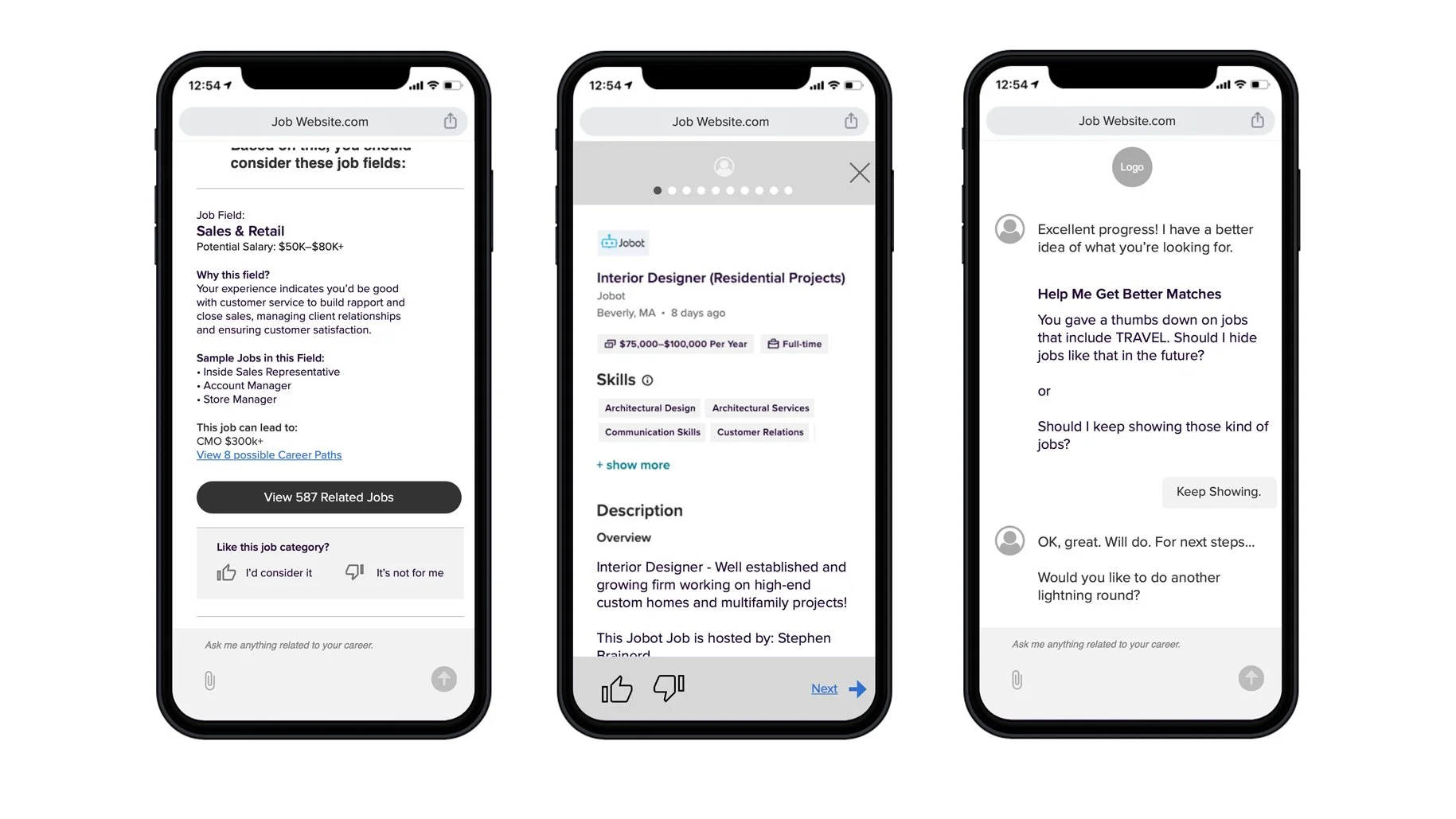
Users quickly review and rate 10 jobs (like / don’t like)
This provides implicit preference dataRefinement
AI surfaces observations:“You preferred remote roles…”
“You skipped software positions…”
Users confirm or adjust
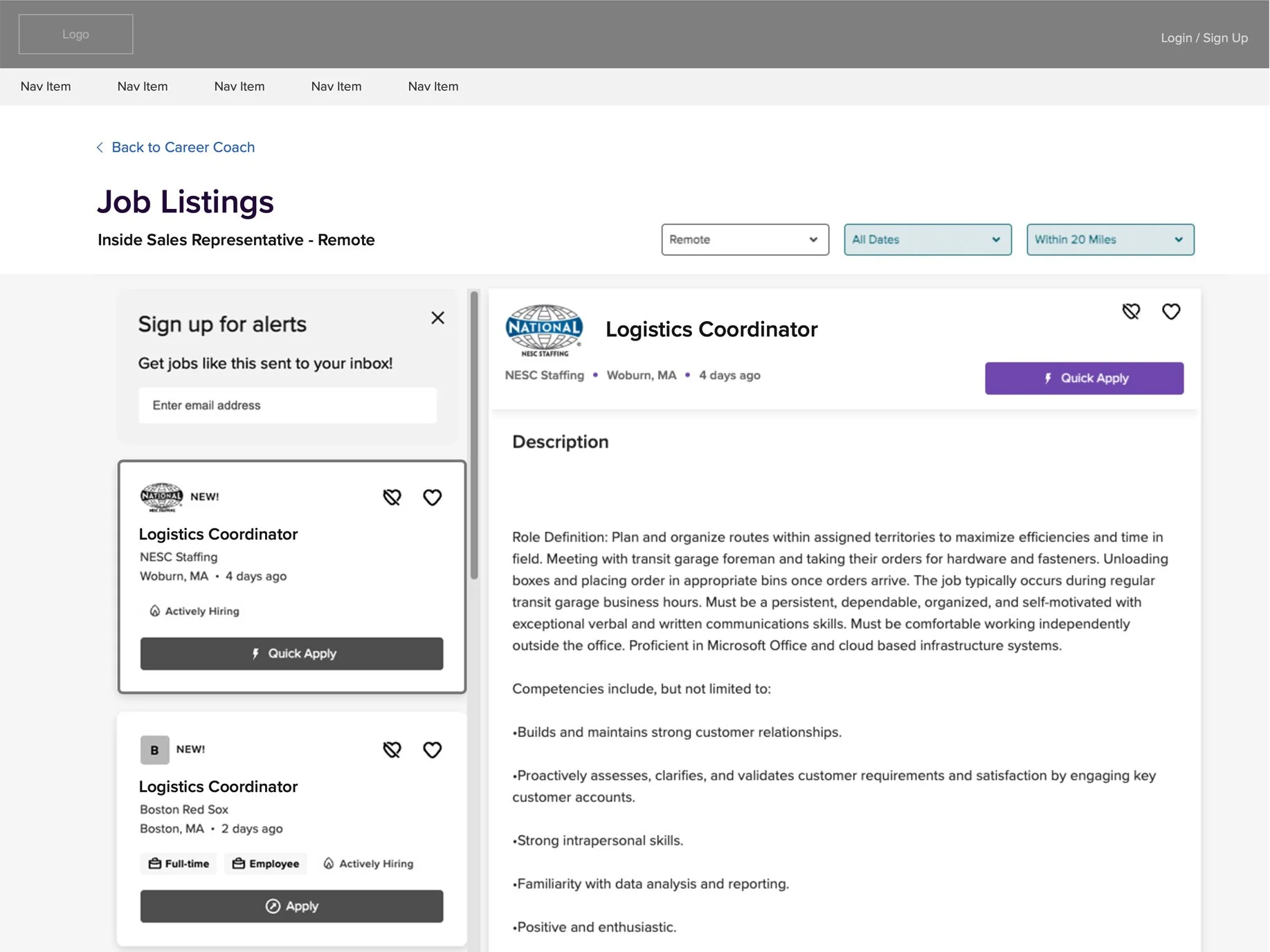
Personalized Job Recommendations
A final job list tailored to both explicit and implicit inputs
AI INTERACTION DESIGN
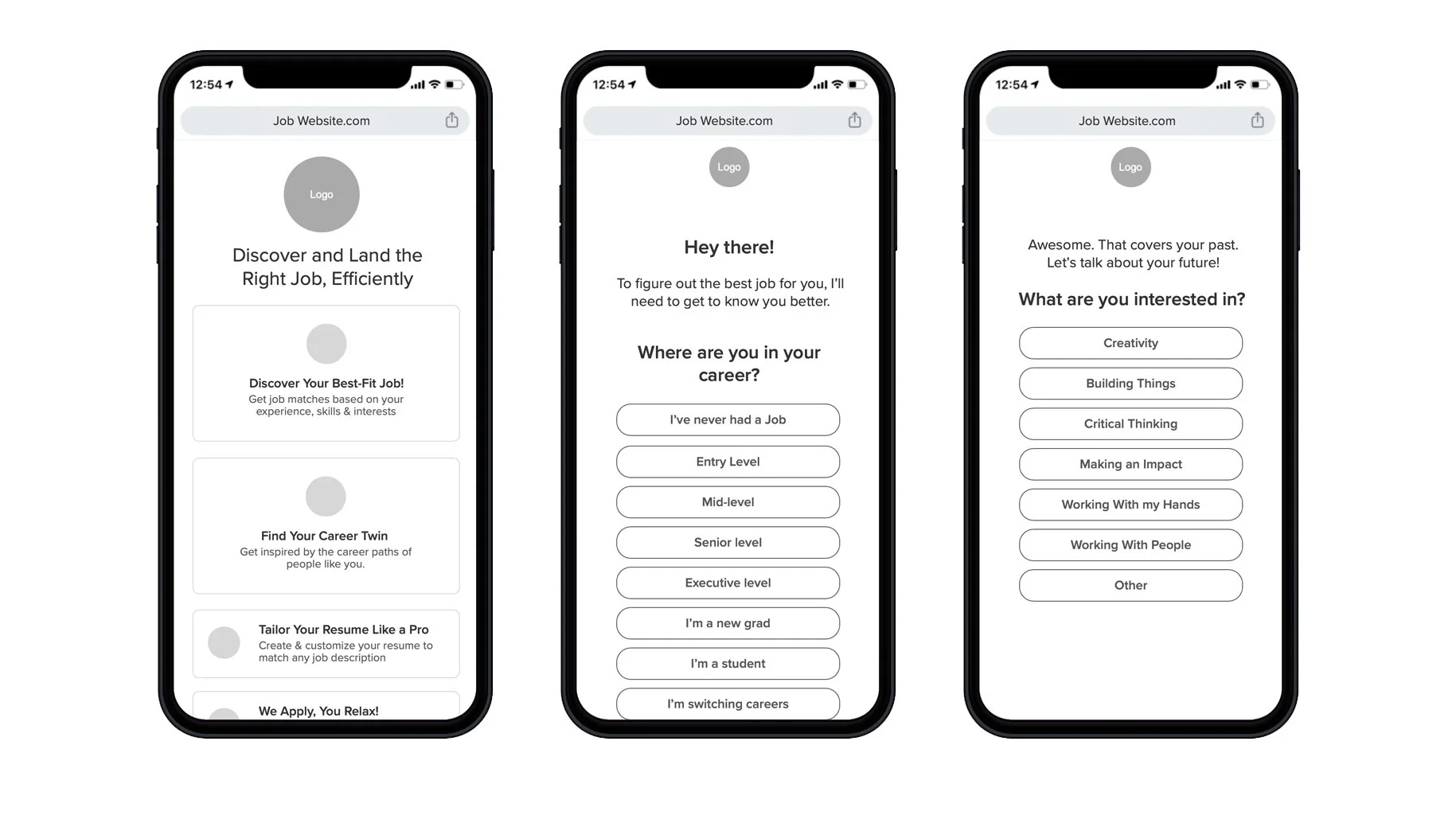
We tested multiple interaction patterns and landed on a hybrid model:
Structured inputs early to reduce friction and decision fatigue
Conversational UI for resume building, where users needed flexibility
The key decision was not choosing one AI pattern—but matching the interaction model to the user’s mindset at each step.
Rather than exposing full control over AI outputs, we:
Tuned tone and length based on user feedback
Prioritized clarity and usefulness over customization
Trust was built through:
Iterative internal testing with Engineering
Tight feedback loops across design and development
Keeping outputs predictable and grounded
ITERATION
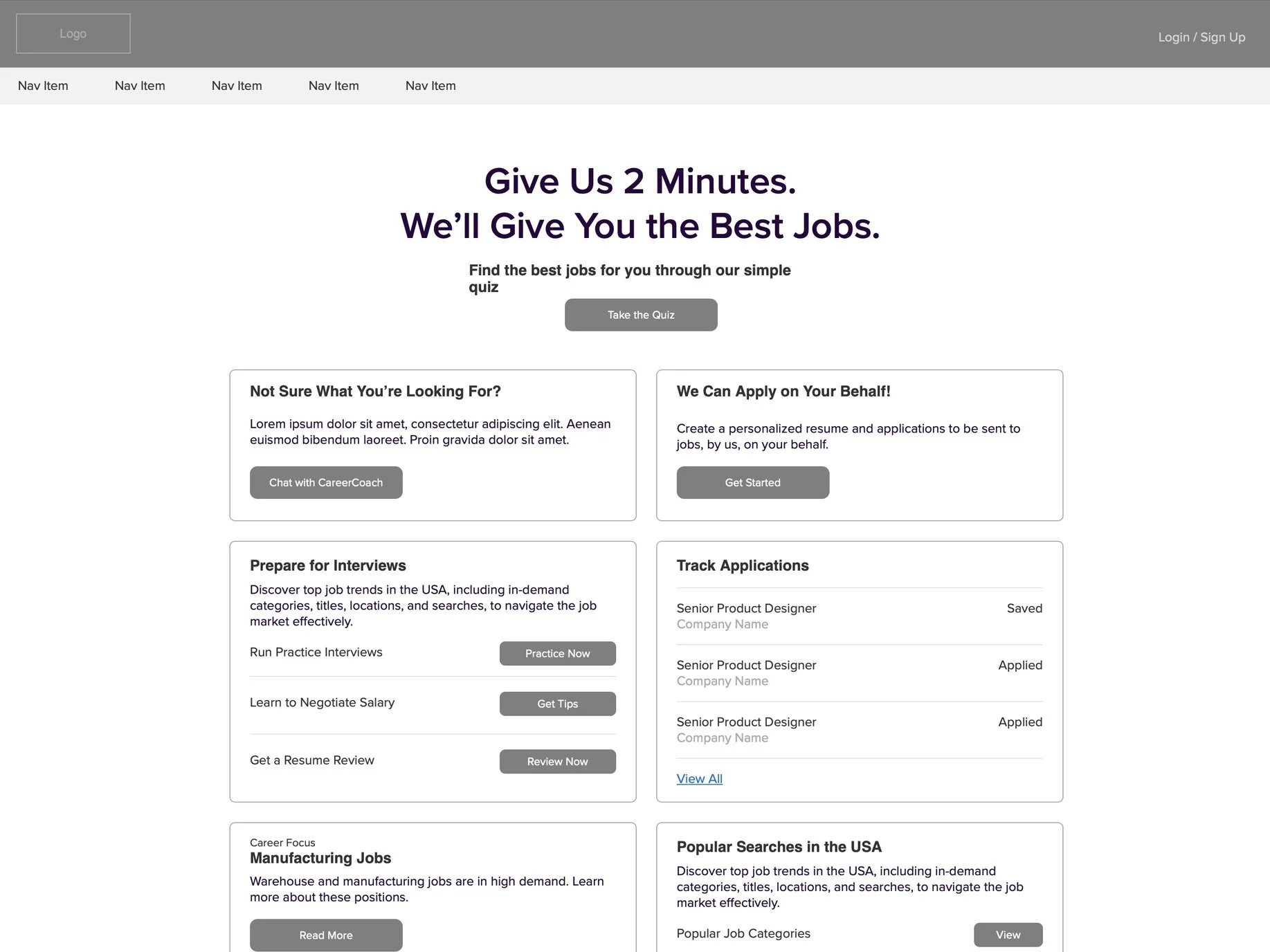
We completed three rounds of prototype testing, each built as a clickable experience:
Round 1 → 2
Reduced scope after learning users didn’t want career discovery
Shifted focus to speed and refinementRound 2 → 3
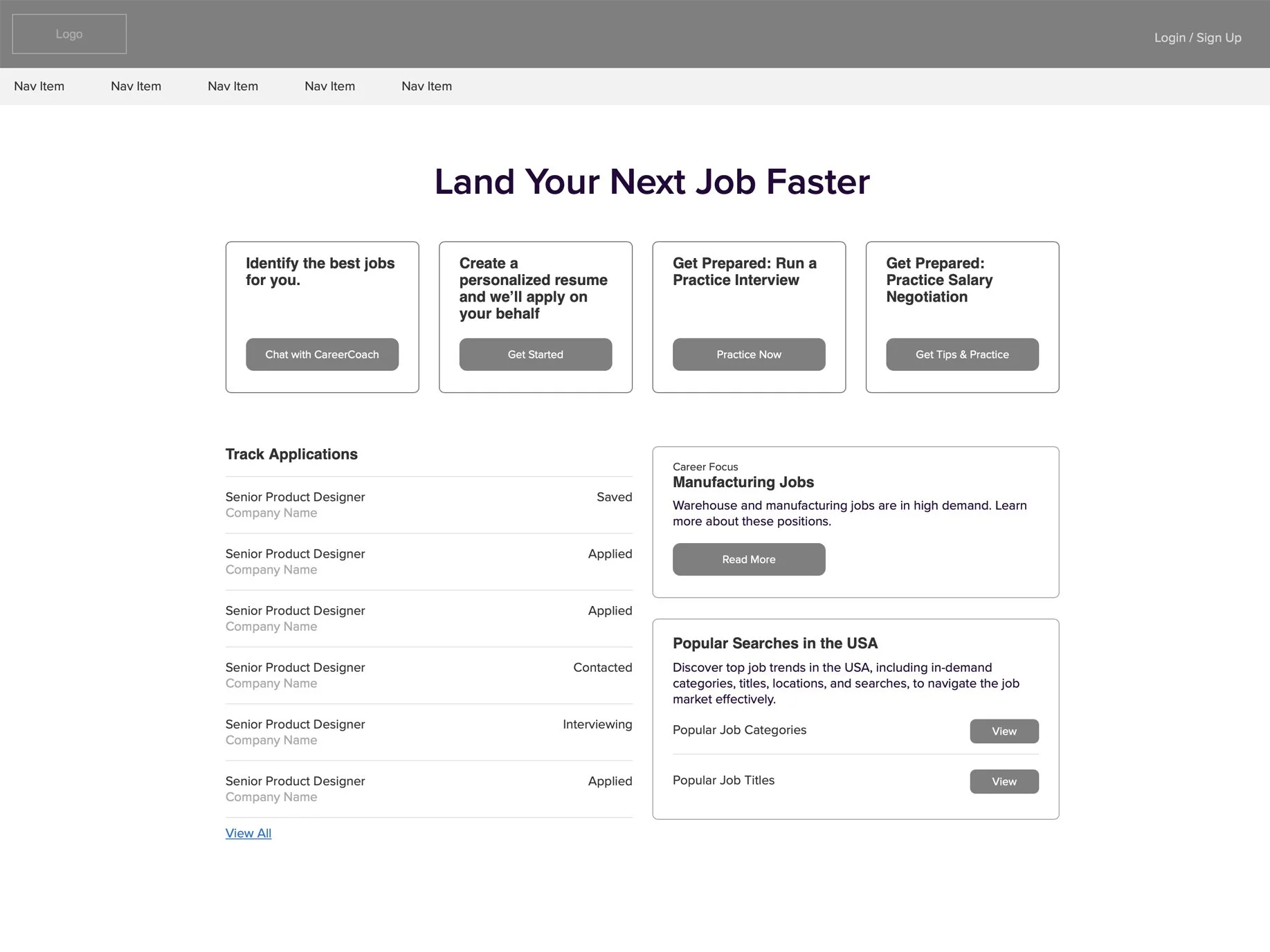
Moved from mobile-first to desktop-first
Users strongly preferred desktop for resume creation and profile setup
Each round helped clarify what mattered most: getting users to relevant jobs as quickly as possible.





CONTRAINTS
1-month timeline from concept to validated prototype
Unclear stakeholder landscape due to merger
Undefined product direction
New and evolving LLM capabilities within the organization
Ongoing internal debate around product strategy
To move forward, I pushed for a user-led approach—using rapid testing to resolve ambiguity instead of internal debate.




FINAL DESIGN
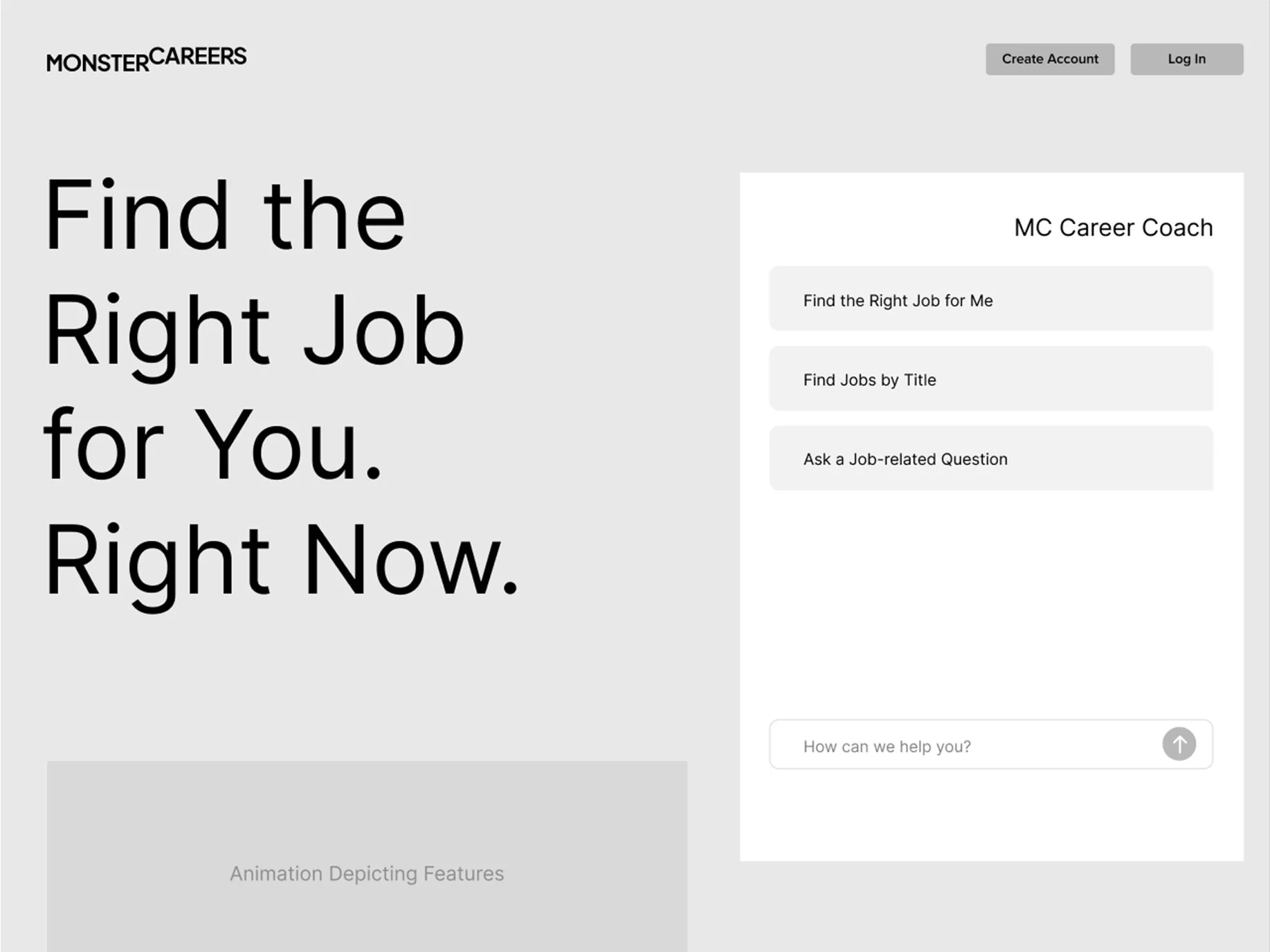
The final prototype combined structured guidance with conversational flexibility:
A streamlined onboarding flow focused on speed
AI-assisted resume creation with contextual prompts
A fast, intuitive job rating system (“Lightning Round”)
Personalized recommendations based on real user input
The experience emphasized clarity, speed, and usefulness—helping users move quickly from intent to opportunity.
FINAL PROTOTYPE
The final prototype was created based on multiple rounds of user feedback and went through many iterations. I then used it to shop our new product concept around to company stakeholders in engineering, sales, marketing and other product groups.
I focused on new features that appealed to the small business userbase, and shared feedback from testing to back up my choices.
Break it up: A multi-page job description flow that broke the process up into logical, bite-sized bits
The Hiring Boost: many of the items in the job posting flow are optional, and likely skipped by users. We pulled user data and inserted it as a point of interest to let users know that though optional, that piece of info will yield more and better applicants.
Strength Meter: This measures how effective the job listing will be, giving real-time feedback as the user adds more data.
Candidates in Your Area: Similar to the Strength Meter, run a real-time count of candidates that Monster knows would be a good match for the job listing in its current state. The better the listing, the more candidates that match.
Location Feedback: To help employers understand why they might not be getting as many candidates as they hoped, we visualized where Monster knows candidates to be, based on the location that the employer listed. We would point out potential issues like long commutes, or a known shortage of talent in their area.
Recommended Changes: I envisioned using AI to evaluate job descriptions in real time, and rate them as “Critical” or “Important” fixes. The UI would operate like Grammarly or similar features, underlining the problematic sections, and offering suggestions upon rollover.
Save for Later: Seems obvious, but not all sites include this. Knowing that small business owners don’t have much time, we included the ability to save job listings as drafts to finish later.
Game-ify Profile completion: Users are more likely to take extra steps and create a more robust Employer Profile when they can earn free credits for each step taken.
Key Tasks & Skills: Reviewing candidates takes time that small business owners don’t have. This feature would call out key phrases or skills that Monster identified based on the job title. Users could skim through the candidate profiles more quickly, finding the right fit for their open position.



LEARNINGS
Users Want Direction, Not Discovery
People arrive with intent. Helping them refine it is more valuable than trying to create it.
One AI Pattern Doesn’t Fit All
Different stages require different interaction models.
Speed Is a Feature
Users judged the experience by how quickly it got them to relevant jobs.
Let Users Define the Product
In ambiguous environments, user feedback is the fastest path to product clarity.